Customer service goals are measurable targets that tell a support team what good looks like and by when, such as raising CSAT from 75 to 80% by the end of next quarter. The best customer service goals are SMART, tied to company objectives, agreed with agents, and tracked every week through customer service QA and coaching rather than reviewed once a year.
In short
- Customer service goals turn company priorities into targets agents can act on, such as CSAT, First Contact Resolution or resolution time.
- Write every goal as a SMART goal: specific, measurable, attainable, relevant and time-bound.
- Combine team goals with individual goals, and set them together with your agents so they own them.
- Back each goal with measurable customer service standards, such as a first reply time or a QA score, so agents know what good looks like day to day.
- Eight goals cover most teams: better measurement, quality, customer satisfaction, efficiency, problem solving, leadership, employee happiness and omnichannel service.
- Goals only change behavior when progress is visible weekly and feeds into agent coaching.
Why are customer service goals important?
Customer service goals matter because support teams are expected to keep customers happy and protect revenue, and goals turn those expectations into clear priorities. They keep agents accountable and engaged, give managers a fair basis for measuring performance, and show everyone what the company values most. Without goals, teams work hard on the wrong things.
Stephen Covey’s book “The 7 Habits of Highly Effective People”, taught by FranklinCovey, has a whole habit called “Begin with the end in mind.” If you don’t know where you’re going, you’re guaranteed to get nowhere.
Setting customer service goals helps you:
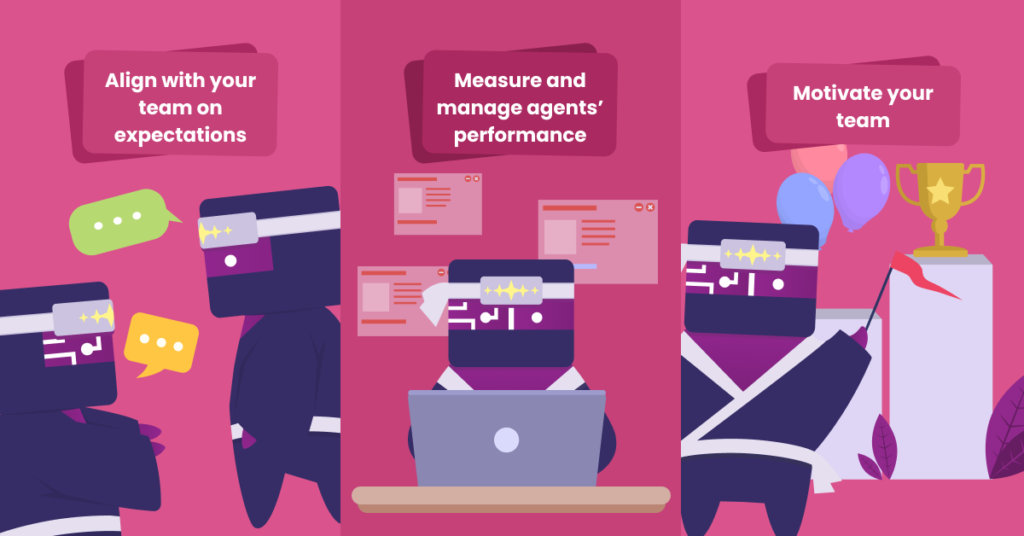
- Align with your team on expectations. When a team works toward mutual goals, everyone can support each other. Knowing the end goal helps agents understand what drives results.
- Measure and manage agents’ performance. Knowing which goals agents need to work on guides their individual tasks. It also tells them what matters most to the company and helps leaders see what’s working and what needs improvement.
- Motivate your agents. People thrive on motivation, whether it’s money, recognition or praise. A clear target to reach for gives agents a sense of accomplishment when they hit it.
Goals are only one part of managing agent performance. The guide on how to evaluate call center agent performance covers the wider picture.
How do you set customer service goals?
Set customer service goals in five steps: define how quality is measured, link goals to company objectives, agree them with agents, split team and individual targets, and track progress automatically. Each step below makes a goal easier to reach and harder to ignore.
Define how customer service quality is measured
Choosing customer service metrics and KPIs for your support team and writing quality assurance guidelines give you and your team direction. Without knowing what you measure, you cannot tell whether quality is improving.
For example, if your company goal is to increase productivity by 10%, your team can contribute by increasing your First Contact Resolution (FCR) rate, the share of issues solved in the first contact, by 5%.
Collaborate with agents
Agreeing a reasonable set of customer service goals together encourages the whole team to get behind them. Letting agents set their own goals gives them ownership of the result, which makes the goals far more likely to stick.
This approach takes flexibility from you and your agents, but everyone should agree on the goals. Create a healthy environment where people can discuss the pros and cons of each metric.
Have both team and individual goals
A great way to motivate agents is to combine individual and team goals. Weekly, monthly and quarterly individual goals plus annual targets for the whole team set a shared understanding of what’s expected from everyone. That way the team aligns with the big picture and succeeds together.
What are SMART customer service goals?
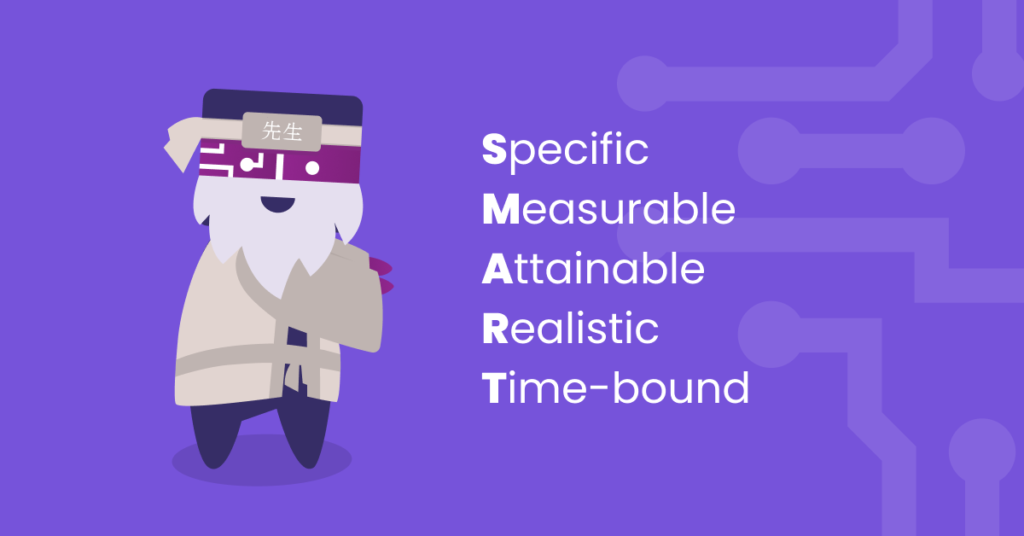
SMART customer service goals are targets that are specific, measurable, attainable, relevant and time-bound. A SMART goal names the metric, the target, the deadline and how the team will get there, for example: decrease Average Resolution Time (ART) per ticket by 10% over 30 days to raise customer satisfaction (CSAT) scores by 10% in the same period.
SMART stands for:
- Specific. Goals should be clear and well defined. Vague or general goals don’t give enough direction.
- Measurable. Goals need concrete criteria for measuring and tracking progress. Without measurement, you risk achieving a goal you didn’t really want.
- Attainable. A goal motivates only when the team is both willing and able to work toward it. Attainable goals can be reached with the right planning, motivation and dedication.
- Relevant. Goals should matter to your business objectives and align with your other goals and company values.
- Time-bound. Goals need an end date; that makes them concrete instead of abstract and helps people stay on track.
This method motivates agents and makes progress easy to track, so you can celebrate your team’s successes.
What are examples of customer service goals?
Good examples of customer service goals are improving how you measure performance, raising service quality, increasing customer satisfaction, improving operational efficiency, building problem-solving skills, developing leadership, boosting employee happiness and offering omnichannel service. Below, each goal comes with a SMART example you can adapt, plus any other measures that matter to your team.
1. Improving how you measure customer service performance
Manual, tedious input costs time and hurts productivity. So does tracking the wrong metrics. First, choose the customer service metrics that match your company goals. Then use call center performance management software to measure customer service and uncover the pain points that need work.
SMART goal in action: Increase the average CSAT from 75 to 80% by the end of next quarter by training the team twice a week on resolving cases faster.
2. Improving customer service quality
Customer satisfaction and retention depend heavily on the quality of your service. Set up a quality assurance framework to structure the work and improve quality assurance. It can include processes for finding the cause of low KPIs, reducing agent turnover and increasing customer loyalty.
SMART goal in action: Increase the First Contact Resolution (FCR) rate by 2% next month by creating Zendesk macros that give customers a quick, detailed answer to commonly asked questions.
3. Increasing customer satisfaction
Learn about your customers by surveying them at every chance. Happy customers become loyal customers, which raises retention. In Salesforce’s 2020 State of the Connected Customer research, 91% of customers said a positive service experience made them more likely to buy again.
When measuring customer satisfaction, include both leading and lagging metrics such as CSAT, First Reply Time (FRT) and total tickets solved. Together they show what’s working and where you can improve. Listen to your customers and you’ll learn what matters most to them.
SMART goal in action: Improve FRT by 20 minutes or 5% per agent by the end of next quarter by hiring two new agents to spread the workload evenly.

4. Increasing operational efficiency
Make sure the whole customer service process runs smoothly and efficiently. Look for gaps in the customer experience to find ways to improve the process.
Whether it’s a new tool or more customer service coaching, there are usually improvements to make. You can also work across teams on vendor relationships and supply chain processes.
SMART goal in action: Increase your FCR by 5% by next quarter by rewarding customer replies that earn high internal QA ratings (4 or 5 out of 5, for example).

5. Developing better problem-solving skills
Solving problems well is an important skill for managers and agents alike. Resolving issues quickly helps raise CSAT, but scores also depend on how helpful an agent is, whether or not the problem can be solved.
SMART goal in action: Reduce Average Resolution Time (ART) by 20% in Q3 over Q2 by helping agents build problem-solving skills through weekly one-on-one quality feedback meetings.
6. Leveling up leadership skills
Leadership skills are not only for managers. Agents should also feel empowered to take the lead, and setting goals together reinforces this. Encouraging your team to learn new coaching and leadership skills makes them more confident in their overall performance.
SMART goal in action: Each agent completes a new skill course in leadership by the end of next quarter, with one hour per week of work time set aside for it.

7. Boosting employee happiness and team spirit
Many support agents are open to new jobs, and people look for workplaces where they feel happy, appreciated and engaged. One way to keep them is to give agents a say: let them create their own measurable goals and reach them within a reasonable time frame, and recognize the progress in their one-to-ones.
SMART goal in action: Measure your team’s happiness with an anonymous survey and compare it with employee turnover over the past year. Based on the feedback, set a goal to improve employee retention by 5% by the end of next quarter.
8. Creating an omnichannel customer service experience
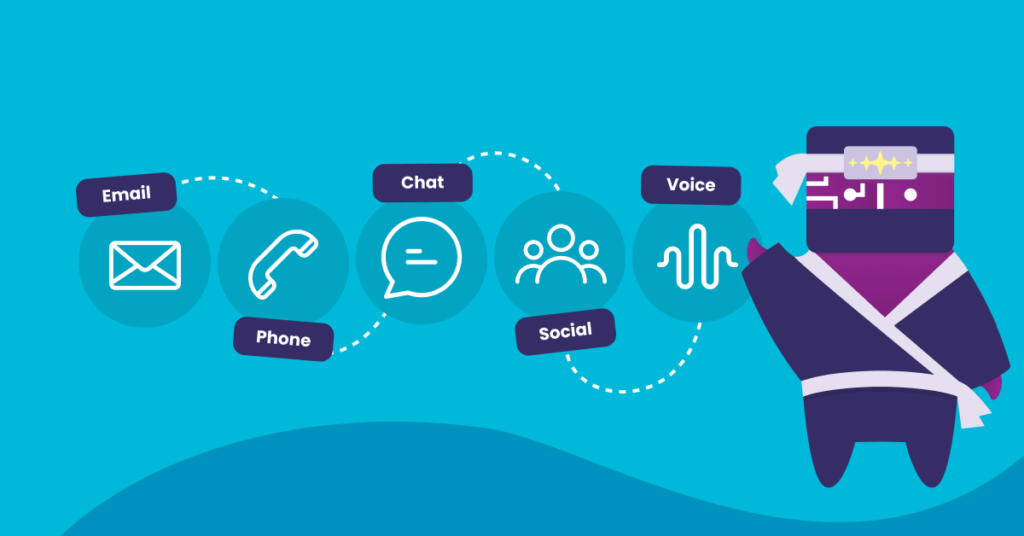
Meeting customers on their preferred channels helps you reach your team goals. When people say you’re hard to reach, ask where they normally try to contact you. If it’s the website, add a clear “contact us” button that lists every way to get in touch. If customers prefer Facebook Messenger, assign agents to that channel.
The key is to keep service quality high and not overstretch resources. For some businesses, this means focusing customers and agents on fewer channels.
SMART goal in action: Add two more customer service channels, including social media and live chat, by the end of Q3. Assign two to three agents to manage them so the average Agent Reply Time stays at 24 hours or less.
Examples of measurable customer service standards
Measurable customer service standards are the day-to-day rules behind your goals: each one names a behavior, the metric that checks it and a target. Goals say where the team is heading; standards say what every conversation should look like on the way.
The targets below are examples to adapt, not industry benchmarks. Set yours from your own baseline, then raise them as the team improves.
| Standard | How you measure it | Example target |
|---|---|---|
| Reply quickly on every channel | First reply time per channel | Chat within 2 minutes, email within 4 business hours |
| Solve it on the first contact | First Contact Resolution (FCR) | 75% of tickets solved without a follow-up |
| Keep effort low | Customer Effort Score (CES) survey | Average of 5 or higher on a 7-point scale |
| Follow the agreed process | QA score on your scorecard | Every agent at 85% or higher each month |
| Show empathy and the right tone | Empathy and tone criteria on the QA scorecard | Met in 9 of 10 scored conversations |
| Give correct information | Accuracy criterion and reopened tickets | Fewer than 5% of tickets reopened |
| Keep customers satisfied | CSAT after each conversation | 85% positive ratings per quarter |
A standard only works if you check it on enough conversations to trust the number. Our guide to what a QA rubric is shows how to turn each standard into a criterion reviewers and AI can score the same way.
How do you track customer service goals?
Track customer service goals with a tool that pulls the numbers automatically from your helpdesk and QA scores, so agents see their own progress every week and managers don’t rebuild spreadsheets. Review progress in regular one-on-ones, adjust targets that turn out unrealistic, and recognize agents who reach them. Manual tracking quickly becomes the reason goals are forgotten.
Your team’s focus is precious, so give them tools that make tracking easy. Manual entry instead of automated data only pulls agents away from helping customers.
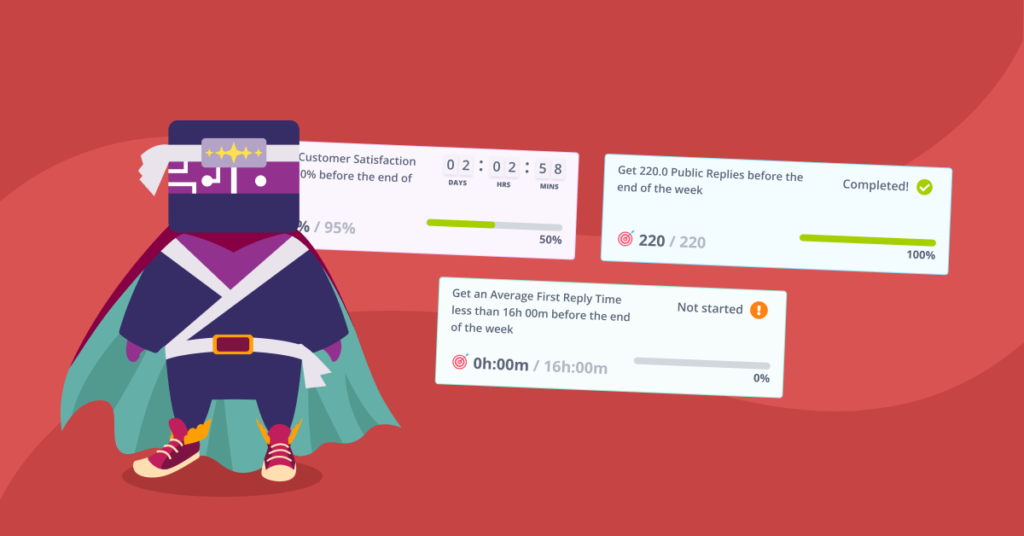
Automating goal setting and tracking saves a lot of time, especially if you would otherwise build it from scratch. Kaizo, which runs inside Zendesk, is one way to do it:
- Goals are set against each agent’s real performance curve, and agents can see their own progress at any time.
- One-to-ones bring coaching history, QA scores, meeting notes and tasks together, so every goal review starts from the record.
- Coaching cards link goals to the conversations behind them, so coaching history, QA scores, goals and one-to-one notes sit in the same place.
For example, SteelSeries, a 30-person support team handling long, technical tickets, uses coaching cards and scorecards together, and AI summaries cut its QA time in half. Our guide on how to turn QA data into coaching walks through that loop step by step.
See it in a live demo. Kaizo scores 100% of your support conversations and turns the findings into coaching, so every goal has evidence behind it. Let’s talk.
When are formal customer service goals not the right fit?
Formal customer service goals are not the right fit when your team is very small or you don’t measure quality yet. With a handful of agents and tickets, a shared scorecard and a weekly conversation are enough. Without agreed metrics, set up measurement first; a target on a number nobody trusts demotivates more than it helps.
Goals also backfire when they reward one metric at the expense of the customer. A target on speed alone, for example, can push agents to close tickets before the problem is solved. Pair every speed goal with a quality or satisfaction goal, and read our guide to customer service metrics and KPIs before you pick them.
Common goals lead to a cohesive team
Shared customer service goals give the team one direction, and agreeing them together turns targets into something agents own.
Customers want to reach you when they need support or advice. They want a fast response and a helpful person on the other end. That’s why customer service will always matter for brands that want to succeed in the long term, and why customer service goals are here to stay.
Creating goals together is motivating and empowering. Giving agents a say engages them, and engaged employees boost team spirit and, ultimately, the company’s bottom line. Use tools for improving customer service, SMART goals and AI coaching software to turn goals into weekly coaching.
Turn these goals into something you can measure weekly
Pick two of the eight goals, write each as a SMART goal with one measurable standard behind it, and review progress in every one-to-one.
In a live demo we will show you which goals a QA scorecard can actually evidence, which ones need rewriting, and how agents could see their own progress every week.
Frequently asked questions
What is a good customer service goal for an agent?
A good goal for an agent is specific to them, measurable and time-bound, such as “complete a leadership skill course by the end of next quarter” or “reduce my Average Resolution Time by 20% in Q3 over Q2”. The best individual goals are agreed with the agent and tracked against their own performance, not a team average.
What is the difference between team and individual customer service goals?
Team goals, often annual, set the direction everyone shares, such as raising CSAT or adding new channels. Individual goals, set weekly, monthly or quarterly, describe what each agent does to contribute. Using both keeps agents aligned with the big picture while giving them targets they control.
How many customer service goals should a team have?
Keep the list short enough that every agent can name the goals from memory. Pick the few of the eight goal areas that match your company objectives this year, and add other measures only when they matter to your team or company.
Which metrics are used to measure customer service goals?
Common metrics are CSAT, First Contact Resolution (FCR), First Reply Time (FRT), Average Resolution Time (ART), total tickets solved, internal QA ratings and employee retention. Mix leading metrics, which show what is happening now, with lagging metrics, which show the result.
What should a SMART action plan for a call center agent include?
One or two SMART goals, the actions that get the agent there and how progress is checked. For example: raise the QA score on product accuracy from 78% to 85% in eight weeks, by shadowing a senior agent once a week and reviewing two scored conversations in every one-to-one. Name the metric, the deadline and who supports the agent.
How often should you review customer service goals?
Look at progress weekly and discuss it in regular one-on-ones, so goals stay part of daily work. Review the goals themselves at the end of each period, such as a month or quarter, and adjust any target that turned out to be unrealistic.