The biggest customer service challenges for growing support teams are manual QA and reporting, too many agents to follow closely, rising quality expectations, hiring the right people, and agent management that still runs on spreadsheets.
Each one has a practical fix, and most come down to seeing more of your conversations and coaching from what you find.
In short
- Automate customer service QA and reporting so managers stop scoring and copying data by hand.
- Protect one-on-ones and team communication as the team grows.
- Pair feedback with coaching and concrete action items.
- Hire for care and motivation, then for skills.
- Replace spreadsheets with one tool for performance, coaching and reporting.
Managing a big customer service team is hard for everyone, even if it often feels like you are the only one dealing with reporting, hiring and training. We gathered our own best advice and talked to other support managers about how they handle these challenges without burning out. Below is their approach, followed by a simple method your agents can use to solve the customer problems behind the tickets.
Top 5 challenges in customer service + solutions to face and prevent them
The top five customer service challenges are time lost on manual tasks, keeping up with many agents, meeting quality expectations, hiring well and outgrowing spreadsheets; each solution below comes from support leaders who faced it.
1. Manual work eats your time
Challenge:You’re wasting a lot of time on manual tasks.
Solution: Automate Quality Assurance (QA) efforts and reporting as much as possible.
Generally speaking, automation helps you save time, maintain accurate data, and even lower your costs. When it comes to managing larger support teams, there’s two core automation types to consider:
- QA automation: Are you leveraging automated QA with your support teams? If not, are you still doing it all manually for each ticket? You can automate some steps of the process right inside your help desk.
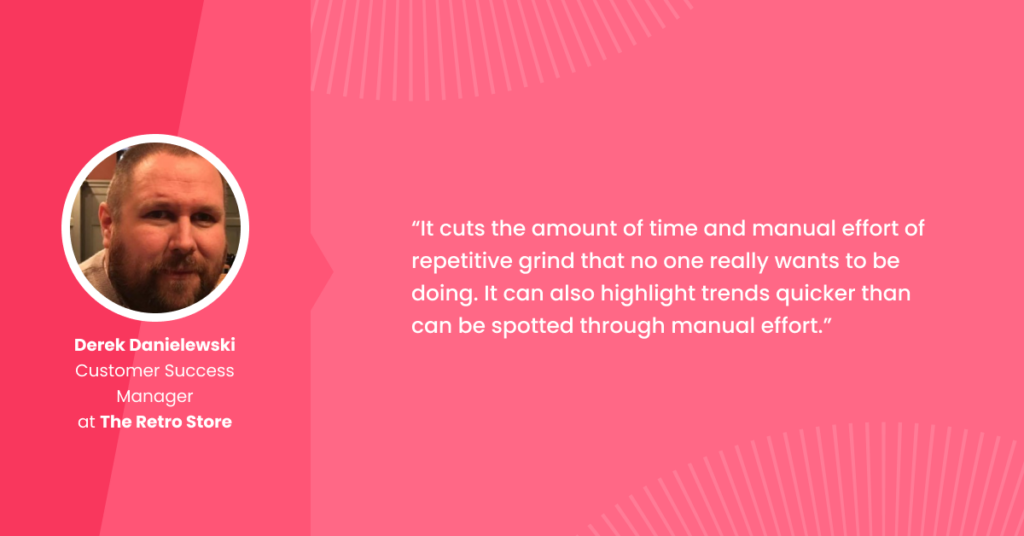
- Automated reporting: Automatic reporting lets you track individual agent performance, plan your team’s capacity, and better understand the data behind your metrics. Derek Danielewski, Customer Success Manager from The Retro Store, also turns to reporting automation.
2. Too many agents to follow closely
Challenge: You have a lot of agents so it’s hard to keep up with everyone.
Solution: Prioritize one-on-ones and team communication.
We’d all love to speak to every agent regularly and do QA for each one of them. But sometimes team managers have so many people that it’s practically impossible to follow everyone’s performance.
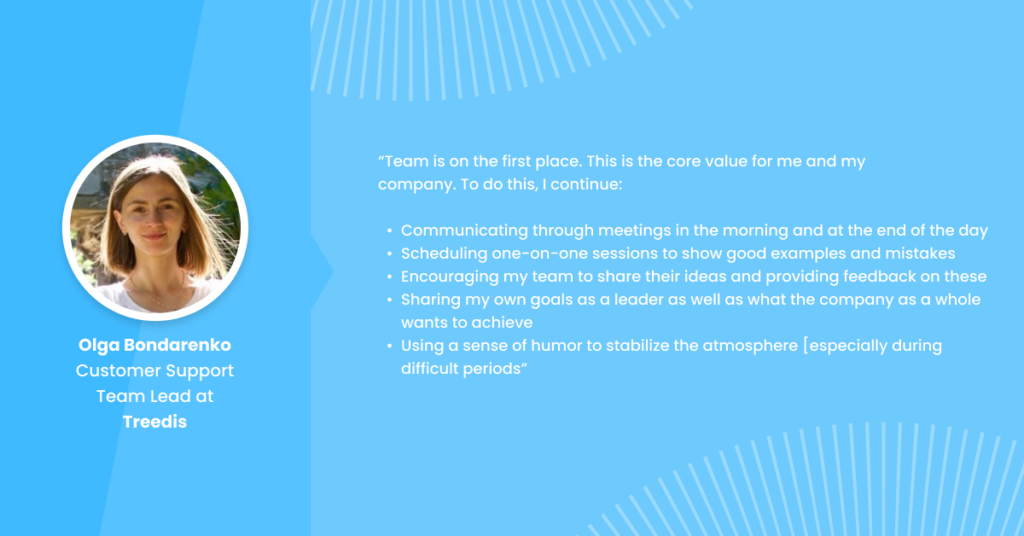
To face this challenge, Olga Bondarenko, Customer Support Team Lead at Treedis, recommends putting your team first before all else.
3. Rising service quality expectations
Challenge: Delivering the level of service quality people expect.
Solution: Ensure continuous feedback and coaching.
When people reach out to your customer support agents, they usually want to get an immediate answer or solution. Sometimes they even expect the support team to do part of their work in their place.
The bigger your brand gets, the more prepared your support has to be to keep up with such demands. The fix is simple: You need to keep providing feedback to your agents AND make sure they’ve got concrete action items to better themselves.
A while back we talked to Heidi Elhawary, Head of User Support at Trivago, on the importance of motivating your support team to give their best and build a lasting career in the field.
One of the core ideas she supported was that merely giving your team feedback isn’t enough. To succeed, teach your agents to be empathetic, understanding, and beyond it all, great listeners. These are the three soft skills they should perfect if you want them to provide the best possible experience for your customers.
Improving the way you share feedback with your team and the follow-up items you provide has immense benefits. Regular feedback and coaching sessions are how a growing, remote team keeps upskilling.
4. Hiring the right people
Challenge: Hiring the right people.
Solution: Write down the top skills and character traits you want your next agents to have. Prioritize hiring accordingly.

A “customer service heart”. That’s what Petra Hageman, former Head of Customer Service at Tripaneer, recommends you check for before all else when hiring new people. In other words, the support team members you hire should genuinely care about helping others and solving their problems with a smile.
Find out what a person’s true motivation is. Do they genuinely enjoy walking people through a solution to their problems? Or do they simply like listening to people and giving advice?
Knowing what drives each candidate will later help you welcome them to the right team or department. This way, you’ll know they’ll enjoy their work and actually deliver the best possible service.
Next steps: No room for compromise when it comes to candidates having the right attributes. So make a list of the must-have traits and skills you can’t give up on. That is everything that can influence the performance of your support team and the satisfaction of your customers [including the three soft skills we mentioned under the previous challenge].
5. Agent management still runs on spreadsheets
Challenge: You’re still relying on spreadsheets for agent management.
Solution: Declutter your tech space by switching to an all-in-one tool.
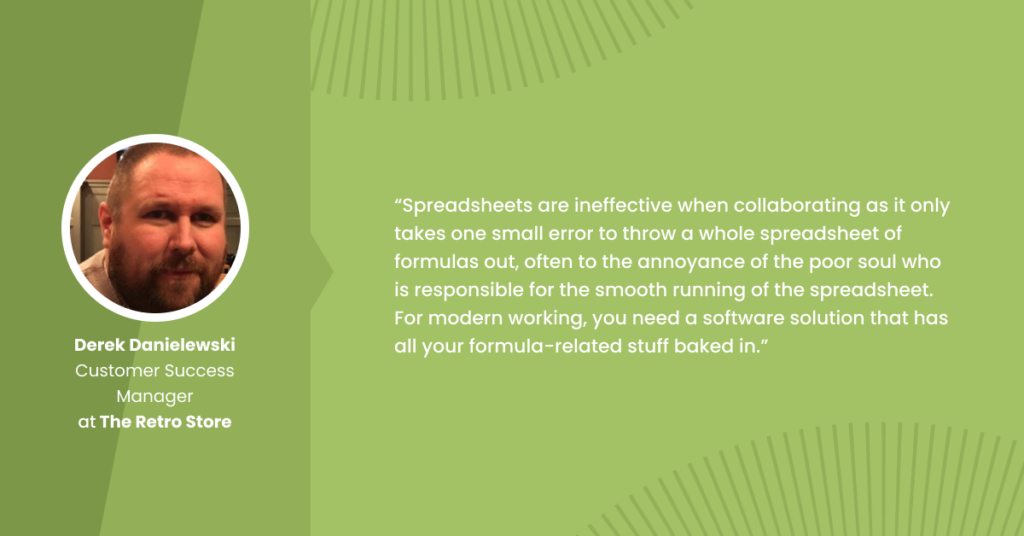
Time to use fewer single-use or outdated apps and more multi-functional tools. Derek Danielewski, Customer Success Manager from The Retro Store, stands to support this.
Ditch Excel for a tool like Kaizo that lets you monitor your support team’s performance, offer coaching, and report on progress. Everything in one solution.

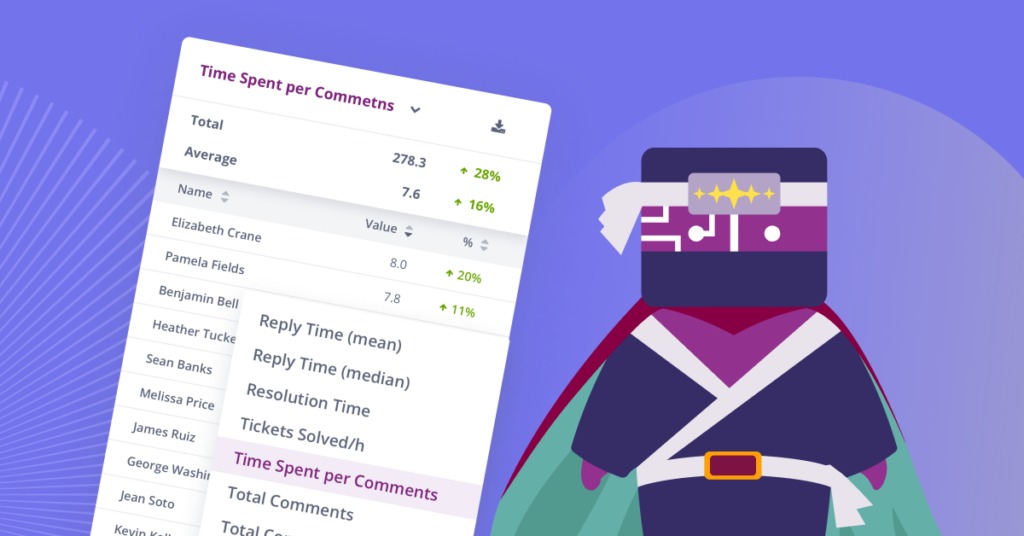
To keep an eye on how your agents are growing, try Scorecards. You’ll no longer have to copy metrics into a spreadsheet or manually update your Zendesk dashboards, because the tool gives you an up-to-date overview of your team’s performance without leaving Zendesk.
How to solve customer service problems: a 5-step method
Solve a customer service problem in five steps: listen and acknowledge, clarify the real problem, find the cause, agree on a solution and act, then confirm it worked and follow up.
The challenges above are about running the team. Inside every ticket there is a smaller challenge: the customer’s own problem. A shared method keeps agents consistent, especially on the hard cases, and gives your QA scorecard something concrete to check.
| Step | What the agent does | What to check in QA |
|---|---|---|
| 1. Listen and acknowledge | Let the customer explain, then show you understood the impact on them | Did the agent acknowledge the problem before solving it? |
| 2. Clarify the real problem | Ask questions until the request is specific: what happened, when, what they already tried | Did the agent ask the questions needed, and only those? |
| 3. Find the cause | Check the account, order or logs, and separate a one-off from a known issue | Was the diagnosis correct and documented? |
| 4. Agree on a solution and act | Offer the fix or the options you have, explain the next step and do it | Was the solution correct, within policy and clearly explained? |
| 5. Confirm and follow up | Check the customer agrees it is solved, and follow up if you promised | Was the outcome confirmed, and did the customer have to come back? |
When the same problem shows up in many tickets, step 3 points beyond the agent. That is a process or product issue, and root cause analysis is how you fix it once instead of in every conversation.
Decide which challenge to tackle first
Start by listing your current biggest challenges.
Is your current team’s performance not up to par with expectations? Are you short on agents? Are you finding it difficult to motivate or retain agents?
You need to prioritize based on which challenges are more likely to impact your overall business goals. E.g. Not having enough agents or hiring the wrong people will slow down your ability to solve tickets in real-time or whatever your baseline is.
You should then be able to plan accordingly and make a change. For instance, if your customers aren’t happy with the support service they’re getting, re-think the way you train your support team. Analyze their performance through Scorecards and create action items for them to develop their technical and soft skills alike.
Book a Kaizo demo to see how you can solve all of the above customer service challenges in one single tool.
Frequently asked questions
How do you stop losing time on manual tasks?
Automate as much of quality assurance and reporting as you can. QA automation saves you from scoring ticket by ticket by hand, and automated reporting lets you track individual agent performance, plan team capacity and understand the data behind your metrics.
How do you keep up with performance when you have a lot of agents?
Prioritize one-on-ones and team communication. When team managers have too many people to follow everyone’s performance, support leaders recommend putting the team first before all else.
How do you provide the service quality customers expect?
With ongoing feedback and coaching, paired with concrete follow-up items agents can use to improve. Feedback alone is not enough: teach agents to be empathetic, understanding and great listeners, and review real conversations against a shared standard so everyone knows what good looks like.
What should you look for when hiring new agents?
A customer service heart: people who genuinely care about helping others. Find out each candidate’s real motivation and write a list of must-have traits and skills, including empathy, understanding and listening, then hire accordingly.
Why replace spreadsheets for agent management?
Because copying metrics into a spreadsheet or manually updating dashboards wastes time and the data is out of date by the time you read it. An all-in-one tool like Kaizo lets you track performance, offer coaching and report on progress in one solution, with an overview of your team inside Zendesk.
What problem-solving skills does a customer service agent need?
Active listening to understand the real request, clear questioning to narrow it down, product knowledge to find the cause, and judgment to pick a solution within policy. Empathy ties them together: customers accept a “no” or a delay far more easily when they feel heard. You can coach each of these skills from real conversations once they are criteria on your QA scorecard.