The customer retention strategies that work combine proactive plays, which remove reasons to leave before customers feel them, with reactive saves for the moment a customer is already halfway out the door. Here are seven, from support leaders at WeTransfer, JustPark, Intercom and Foot Locker.
In short
- Retention is the goal every support activity eventually serves.
- Proactive strategies cut the number of reasons customers have to contact you.
- Reactive strategies decide whether a contact ends in churn or advocacy.
- Churn signals sit in conversations most teams never review.
What is customer retention?
Customer retention is the practice of keeping the customers you already have, so they keep coming back to you instead of going elsewhere and stay a source of revenue. And that requires trust.
Retention covers everything a company does to:
- Reduce the number of customers that churn
- Increase the number of repeat customers
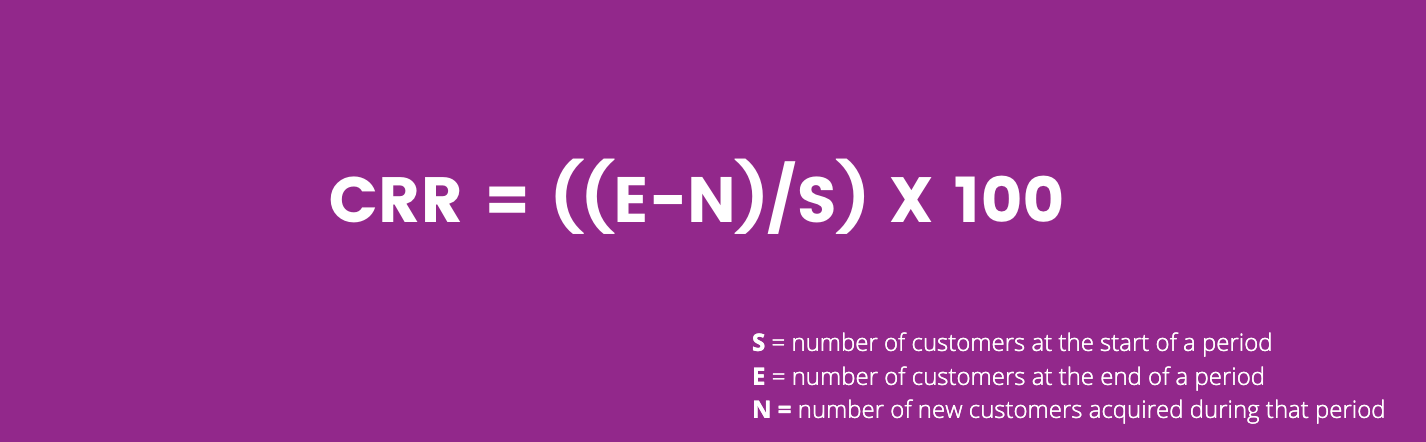
Churn rate is the other side of the same coin: the percentage of customers you lose from one quarter (or one year) to the next. If many customers leave when they could have been kept, your churn rate is high and your retention rate is low.
Why is customer retention important?
Ask what customer support is for and you get plenty of valid answers: keeping customers satisfied, building loyalty, validating product-market fit, standing out in a crowded market. All of them lead back to one goal: customer retention. A company’s most valuable customers are the ones who stay.
Keeping an engaged, satisfied customer base matters because it:
- Boosts profit through customer lifetime value. Bain & Company research, cited by Harvard Business Review, found that raising retention by 5% increases profits by 25% to 95%.
- Saves acquisition costs. The same HBR piece puts acquiring a new customer at five to 25 times the cost of keeping an existing one, depending on the study and the industry.
- Leads to advocacy. Customers who stay long enough start referring others, which is the cheapest acquisition channel you will ever have.
Whose job is customer retention?
Business experts have long debated whether retention belongs to sales, marketing or customer support.
Traditionally the work was split: sales and marketing handled proactive retention, customer support handled reactive retention.
That split has blurred. With AI and performance management tools, support is now the function best placed to keep customers, both reactively AND proactively. It sees every complaint, every workaround and every “I’m thinking of cancelling” before anyone else does.
So we asked Jeff Sen, VP of Customer Support at WeTransfer, Mike Miner, Head of Support at JustPark, and other experienced leaders which strategies support teams can use to keep customers.
Customer retention strategies
A good retention plan balances proactive and reactive activity, so the customer’s whole experience holds up.
In a 2019 Pega survey, 95% of customers said they want some degree of proactive communication from the companies they buy from. Proactive strategies are your first line of defence: they reduce the need to contact you and head off churn before the question comes up.
Customers will still contact you, though. In the same survey, a phone call with a person (62%) topped the list of channels customers would choose. So reactive strategies matter at least as much. They are the tipping point between a customer churning and becoming an advocate.
Whichever strategies you pick, three ideals sit at the centre:
- Keeping your customers engaged and happy
- Minimizing customer effort and maximizing access to service
- Listening to your customers’ needs and adapting
Proactive or reactive: which strategy to use when
| Strategy | Type | Use it when |
|---|---|---|
| 1. Proactive feedback loop | Proactive | The same complaints keep coming back and product never hears them |
| 2. Customer self-service | Proactive | A large share of tickets are repeat “how do I” questions |
| 3. Tailored open hours | Proactive | Wait times spike at predictable times of day or week |
| 4. Omnichannel support | Proactive | Customers can’t reach you where they already are |
| 5. Surprise and delight | Reactive | A valuable customer is about to leave over one bad experience |
| 6. Efficient backlog handling | Reactive | Peak periods push response times past what customers tolerate |
| 7. Customers for life | Reactive | A long-standing customer asks for an exception the policy says no to |
Proactive customer retention strategies
Proactive retention is not limited to self-service and AI. Those matter, but teams also need internal processes that build long-term loyalty.
1. Build a proactive customer feedback loop
Your customers are your best source of information on how to give them a better customer experience.
Don’t wait for criticism. Proactively ask for feedback on three areas:
- Level of support
- Product or service
- Operations and processes
Categorize the input with ticket tags and keyword analysis to spot trends in what customers need to stay satisfied and keep using your product.
To act on it, hold monthly and quarterly meetings with support, product and operations, and agree concrete steps to improve your customer experience.
“Each of our senior agents has a product team that they work with directly. We have dedicated team members that gather the feedback and data and have regular sessions with product owners on how to improve”
Jeff Sen, Vice President Of Customer Support at WeTransfer
Customers who see their feedback turn into changes get the experience they expect, and they stay.
2. Invest in customer self-service
Letting customers solve their own issues has become one of the most favoured forms of customer self-service (CSS). To keep customers happy and engaged with as little effort as possible, support teams can run three CSS activities:
- FAQ and help center: An intuitive help center that answers your most frequent questions lets customers fix issues before they get frustrated and reach out.
- Peer-to-peer communities: An active P2P community lets customers share and find answers without you writing every article. It needs moderation, but the effort is low and it keeps customers informed.
- AI chatbot or AI agent: A good first-line tool for simple questions, as long as it hands over to a person cleanly when it can’t help.
“Investing in self-service gives you the power and flexibility to provide incredible support to more customers while improving your team’s efficiency and performance”
Phil Byrne, Manager, Product Education at Intercom
Retaining a customer comes down to listening to their needs and giving them what they want. For a lot of questions, what they want is a simple, easy-to-use self-service option.
Be as accessible as possible
Accessibility is one of the biggest factors in keeping customers satisfied and loyal. It means three things:
- Simplifying processes
- Tailoring your open hours to your customers’ needs
- Providing omnichannel support
“In the digital world, we were looking at ways to make payments easier to have a better understanding of availability of products and better performing websites. So we’re investing, we’re investigating, and we’re improving. And it’s a steady process.”
Dirk Soetekouw, Director of Customer Care EMEA at Foot Locker
3. Tailor your open hours
Being accessible doesn’t always mean longer hours. It means knowing your peak periods and staffing for them.
Pull ticket volume by weekday and by hour from your helpdesk. It shows which days and time slots need more agents and which need fewer. Review it monthly, because peaks move with product launches, seasons and campaigns.
That lets you spot busy periods early and staff to give customers the best service you can.
4. Provide omnichannel support
Being reachable on the right channels matters. An Aspect Software survey reported by Loyalty360 found that businesses with omnichannel strategies achieve 91% greater year-over-year customer retention than those without.
Opening every channel at once, though, hurts efficiency and can make the experience worse. Two ways to make sure your channels are the ones customers want:
- Track the number of tickets received per channel in your reporting, so you know where to focus your effort and keep quality high.
- Add a question to your proactive feedback survey asking which channels customers would like to use.
“One of the biggest annoyances of customers is not being able to get in touch when and how they want. It’s important to make sure customers feel assured that if something goes wrong you’ll be there for them”
Mike Miner, Head of Support at JustPark
Reactive customer retention strategies
Proactive strategies work, but customers will still need to contact you. When they do, they’re usually unhappy. Reactive strategies turn that negative experience into a positive one.
5. Surprise and delight your customers
Customers often reach out with an issue that could be the catalyst for churning, and your policies limit how much you can help.
Instead of sending a standard macro or saying there’s nothing you can do, go the extra mile every so often. Do something out of the ordinary to turn their negative into a positive.
“We had a customer who told us his app was broken and that if it really did work, we should come over and show him how it functions. So the next day, we called him, jumped on a train and did just that”
Mike Miner, Head of Support at JustPark
It doesn’t scale. It does keep one valuable customer, and it can win more through word of mouth and the story getting shared on social media.
6. Tackle your backlog efficiently
In peak periods backlogs grow quickly. This is make-or-break time for retention.
The key to tackling a backlog is balancing quality and speed.
Leave a ticket too long and the customer is likely to churn. Answer sooner but worse and the customer is unsatisfied, and you have a multi-touch ticket on your hands.
So how do you steer agents towards the balance? Incentives.
Kaizo’s gamification lets you set missions and challenges against real quality metrics, so agents chase quality and speed together during peaks instead of closing tickets at any cost.
“Using elements of gamification helps not only diffuse the stress of a massive backlog but incentivizes agents to tackle it head-on. It can turn it from a dreaded task into a friendly competition”
Jan Brenneke, Chief Supply Officer at Talixo
Weight the missions towards whatever matters most to the company right now. That keeps the team improving speed and quality together.
7. Establish customers for life
It sounds obvious, but one of the strongest retention strategies is building trust by being human and fair.
Refunds are a good example. If a customer has used your service for three years and their business suddenly goes under, and they want to leave early, let them.
“We would rather have a happy free user than a disgruntled premium user who didn’t get their refund. You KNOW they will never return to the service”
Jeff Sen, Vice President Of Customer Support at WeTransfer
This has to be within reason. But don’t underestimate the difference between a customer who got fair treatment and one who feels like a number. It can be the difference between churn and advocacy.
How quality assurance finds the conversations that cause churn
Most churn announces itself in a support conversation first: the third contact about the same bug, a refund refused by the book, a reply that answered the wrong question. Teams that review a small random sample rarely see those conversations until the cancellation arrives. Reviewing every conversation against your own scorecard surfaces them while there’s still time to act. Automated QA scores 100% of tickets, so you can filter for the patterns that precede churn, such as repeat contacts or unresolved issues, and route them to a lead the same week. The findings then feed both the coaching for the agent and the fix for the product or policy that caused it.
Balance is key
Customer service is a relationship between a company and its customers that continues over time, and it starts with how you treat people when they first become customers.
The best way to catch new fish is to make sure your current ones don’t wriggle off the hook. There are many ways to do that, and they all come down to the same thing: keeping customers happy so they keep coming back.
Support will keep playing a bigger role in retention. Proactive or reactive, what matters is keeping customers engaged and happy, minimizing their effort, and listening and adapting.
Frequently asked questions
What are the best customer retention strategies?
The seven above cover most situations: a proactive feedback loop, self-service, tailored open hours, omnichannel support, surprise and delight, efficient backlog handling and fair treatment of long-standing customers. Start with whichever matches your biggest source of churn. If you don’t know that source yet, find it in your support conversations first.
What is the difference between proactive and reactive retention?
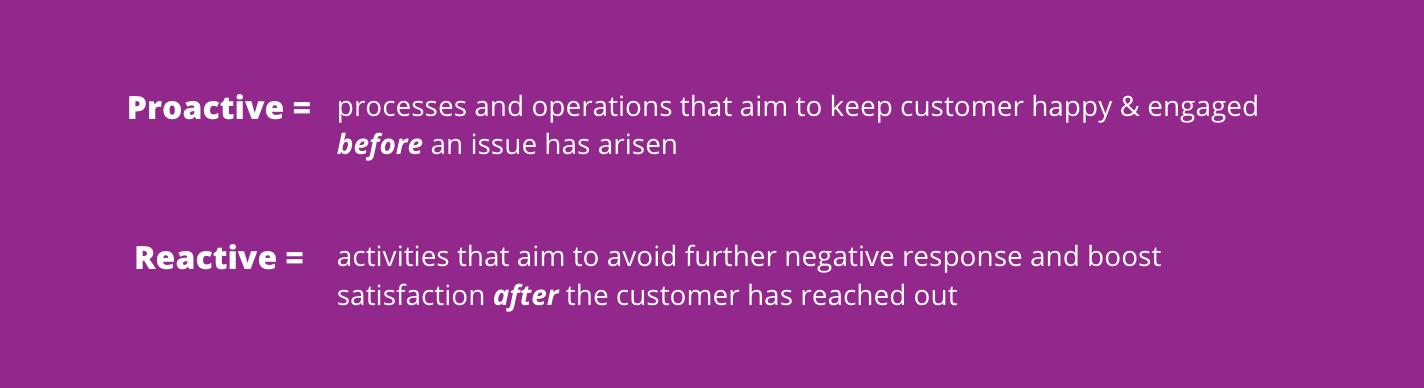
Proactive retention removes reasons to leave before the customer runs into them, through feedback loops, self-service and being easy to reach. Reactive retention is what you do once something has gone wrong and the customer has contacted you. Both are needed, because no proactive plan prevents every problem.
How does customer service affect customer retention?
Support is where customers end up when something breaks, so it’s where many stay-or-leave decisions get made. A fast, accurate, fair answer can turn a frustrated customer into an advocate. A slow or scripted one confirms their decision to go.
How do you measure customer retention?
Customer retention rate is the share of customers at the start of a period who are still customers at the end, excluding new customers gained during it. Churn rate is the inverse. Track both alongside support signals such as repeat contacts and CSAT, so you can see which experiences come before churn.